Articles
Why We Built an AI Receptionist You Can See
What problem were we actually trying to solve?
Ask a small business owner how they lose customers and they will usually talk about price, or a competitor across town, or advertising that costs too much. Watch the business operate for a week, though, and a quieter leak shows up: the phone rings while everyone is with a customer, on a job, or closed for the day. The caller leaves a voicemail — or doesn't — and then calls the next business on the list.
The numbers behind that leak are stark. As we publish on AiHiddenLeads: 85% of callers who hit voicemail never call back. And 78% of customers have abandoned a business after just one unanswered call. Read those two figures together and the shape of the problem changes. A missed call is usually not a delayed sale. It is a finished one — finished in the competitor's favor, within minutes, and the owner never even knows it happened.
This is not a problem of effort. A two-person shop cannot answer the phone while both people are doing the work the phone calls are about. It is a problem of coverage: nights, weekends, lunch hours, job sites, and the exact moment three customers call at once. Hiring a full-time receptionist is the traditional answer, and for many small businesses the honest arithmetic on salary, benefits, and turnover simply does not work — especially when the coverage they actually need is the hours no receptionist wants to work.
Why not just use a voice bot or an answering service?
Those options exist, and each solves part of the problem. A voicemail box captures a message nobody returns quickly enough. A traditional answering service takes a message too — a human one, but still a message, with the conversation itself deferred to a callback that may come hours later. A voice-only AI can hold a real conversation, and that is a genuine step forward. But it leaves something on the table: the caller is talking to a disembodied voice, with no way to judge whether they are being understood, helped, or quietly processed.
People read faces. It is the oldest trust mechanism we have. When a customer walks into a business, the first thing that happens is eye contact and a greeting from a visible person. That moment does real work: it says someone is here, someone is accountable, your business matters to us. A voice on a phone line or a chat box in the corner of a website cannot do that work in the same way. We kept coming back to a simple question: if the greeter matters so much in person, why should the digital front door of a business be faceless?
So what did we build?
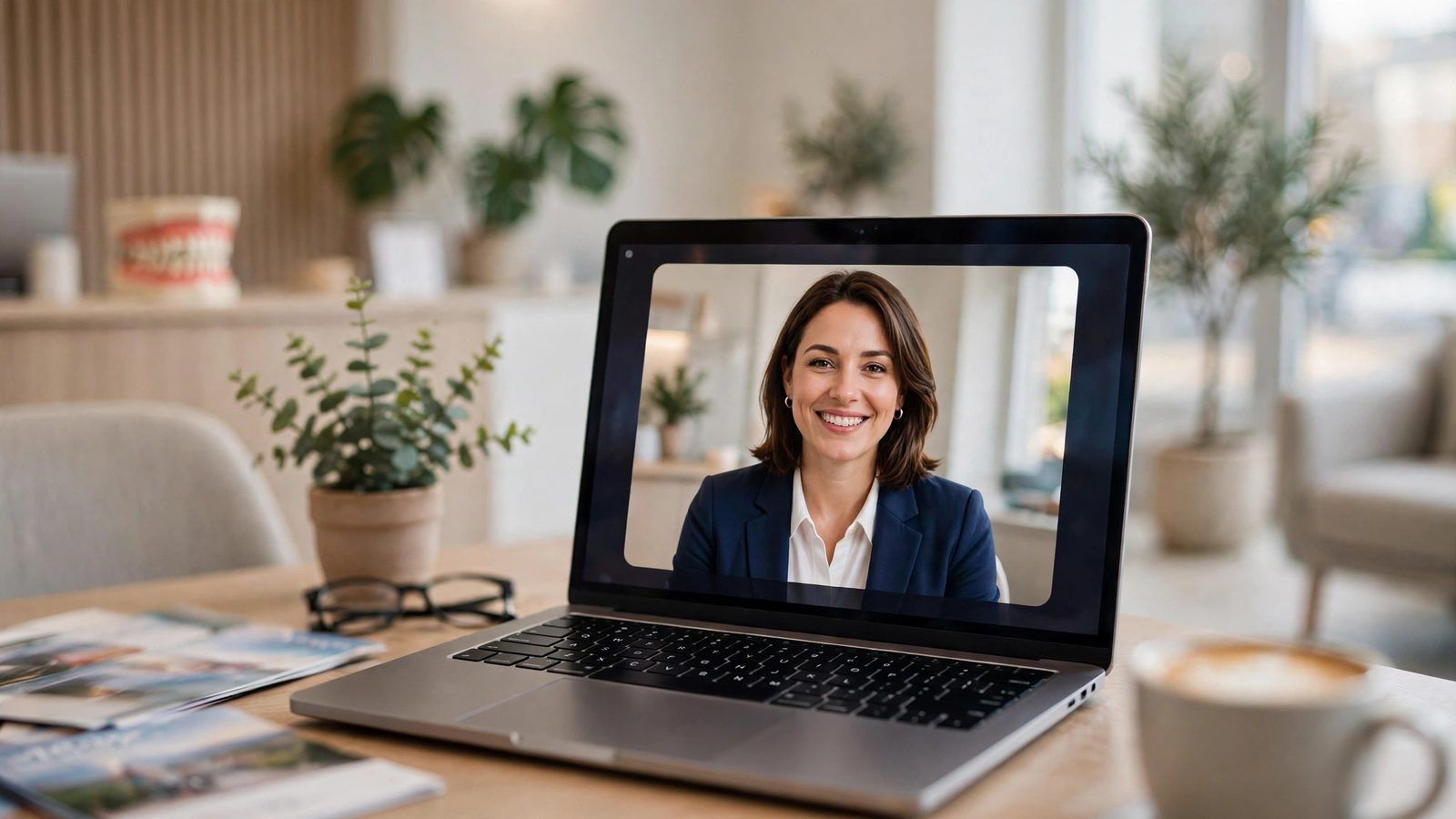
We built AiHiddenLeads: an AI receptionist with a live video avatar. On a business's website, a visible spokesperson — ours is called Aspen — greets the visitor face to face, speaks with them in a natural conversation, answers questions about the business, qualifies what they need, captures their contact details with consent, and books appointments. On the phone line, the same intelligence answers calls around the clock, so the 9 p.m. caller and the Sunday caller reach a helpful conversation instead of a voicemail box.
The video is not decoration. The spokesperson is the interface: she listens, responds, and can be interrupted like a person. For the visitor, the experience is closer to walking up to a front desk than to filling in a form. For the owner, every conversation is captured and summarized instead of evaporating — which is the entire difference between a ringing phone and a ringing phone that someone answered.
Does a face really change anything?
We believe it changes the first ten seconds, and the first ten seconds decide most of what follows. A visitor who is greeted by a person — even an AI person, openly presented as one — stays, asks questions, and shares what they need. A visitor met by a blank page, a ringing tone, or a robotic menu starts looking for the back button and the next search result. Trust is not a soft extra in small business; it is the product being sold before the product. A plumbing company, a law office, a med spa, a real estate team — all of them sell confidence first and services second. The face is how the front door starts that sale.
We are equally clear about what the face is not. Aspen is an AI assistant, and the product says so. The goal was never to fool anyone; it is to give a small business a front door that is present, polite, and competent at the hours and moments when its people cannot be.
What does it cost, and where can you see it work?
AiHiddenLeads is priced for the businesses it serves: $99 per month for Premium and $199 per month for Professional — a fraction of one hire, covering the hours a hire cannot. If you want the full arithmetic, including how the alternatives compare, AiHiddenLeads publishes a straight cost guide to AI receptionists, and a growing set of articles on the category.
But the honest way to judge any of this is not an article — it is the product itself. The free live demo lets you watch the receptionist work on your own website, in about the time it takes to read this page. That is deliberate. A company that sells "never miss a customer again" should be willing to be tested live, by anyone, at any hour. Including 9 p.m. on a Sunday — which is, after all, the point.